Showing posts with label hand embroidery. Show all posts

Sunday, November 16, 2025

Making progress on a new fabric stitch book

I’ve taken a page or two of my new fabric stitch book to work on while traveling. I am pleased with the good progress that has been made. 

New stitched iris composition using a stenciled print and painted fabric scraps.

Original stenciled image of the iris.

Back view of the iris composition.

Two stitched samples have been mounted onto fabric for book pages. The background fabrics for both are yarn dyed shot cottons.

Stitched landscape mounted on a background fabric.

A Dropcloth stitch sampler is mounted on a grass green shot cotton background fabric. 

A stitch sampler from Dropcloth Samplers mounted on a background fabric page

Back view of the mounted stitch sampler.

On this page (below), the painted cloth has been combined with hand embroidery and kantha running stitches. I haven’t decided if additional embroidery is needed to enhance more of the leaves.

Filling out the composition with embroidery and running stitches.

Still a work in progress… but coming along nicely.


Saturday, June 7, 2025

A 100 Day Project made into two textile books;
a Make Nine finish

A revisit to my 100 Day Project from 2023 resulted in a two-volume set of stitched and collaged textile books. I learned the slot-and-tab binding technique through this year’s 100 Day Stitch Book project, and decided to use it to compile the individual stitched and collaged compositions from 2023 into a finished piece—a book. Learning from the experience with the 100 Day Stitch Book, the assembly for these two books was smooth and I couldn’t be more pleased with the outcome.

100 Day Project 2023.
Volume I (left) and Volume II of stitch and fabric collaged compositions.

The new books required covers

With 18 compositions to work into a textile book (a lot of pages that would make a very thick book!), I decided to divide the compositions into two volumes. This made the assembly more manageable and allowed the compositions to relax and expand on the pages.

Making two books/volumes required making two [new] book covers. With these newly stitched covers, I was able to document the name of the project. This is the cover for Volume I (a 12-page book + cover) …

Cover for Volume I. Measurements: 9.75” x 9”

… and this cover is for Volume II (an 8-page book + cover).

Cover for Volume II. Measurements: 9.75” x 9”

In my group of stitched compositions, I had one partially finished page. I decided to finish it so there would be less blank pages. This made a total of 19 compositions divided into two books.

  • Volume I: 12-page book with 11 stitched compositions.
  • Volume II: 8-page book with 8 stitched compositions.
  • Front and back covers are in addition to the inside pages.

A partially completed page from 2023 was finished in 2025 and added to the book.

The inside compositions/pages were all 9” square. The front and back covers, as well as the inside front and inside back covers, were cut slightly wider, at 9.75” x 9”, to accommodate the spines. 

View of the book spines.

View of the front and back covers that wrap around to create the spine.

Discoveries, notes, and tips

To make note of a few things for future slot-and-tab books:

  • All the pages are yarn-dyed fabrics [from Diamond Textiles] which are a dream for hand stitching.
  • The surged edges of the book’s pages helped when turning the signature right-side-out.

Sewing past the corners on each side.

  • When sewing the signatures, I sewed off the edges at the corners (rather than pivoting and turning). The stitch line was used as the guide for turning the corners right-side-out.
  • I love the stitching on the backs (wrong sides) as much as the stitching on the fronts! So, I took photos of the compositions (fronts and backs) before assembling the signatures. 
Back sides of two of the stitched compositions.

  • The paper folding dummies were extremely necessary as the slot-and-tab assembly does not follow the conventional pagination scheme for book signatures. 
  • I’m thinking about adding a pocket in one of the books to hold the paper dummies.

Paper folding dummies for pagination.

Four-page signatures.

Here are a few of my favorite page spreads.

Page spread. 100 Days of Stitch and Fabric Collage, 2023. 

Page spread. 100 Days of Stitch and Fabric Collage, 2023. 

Page spread. 100 Days of Stitch and Fabric Collage, 2023. 

The left page on the spread (below) was the newest composition that was started in 2023 but completed this year.

The additional, new composition is on the left.

A Make Nine 2025 Finish

These textile books are fulfilling one of the UFO prompts for Make Nine 2025.

Make Nine 2025 “UFO” prompt.

Make Nine 2025 tracker. June 1, 2025.

The last page of Volume II.

I’m happy to have these stitched compositions from my 100 Day Project from 2023 in book form. And I do see more slot-and-tab textile books in my future.


Thursday, November 23, 2023

Gobble up a good book and slow stitching on Thanksgiving

Before you succumb to the over-abundance of turkey and fixin’s and the pecan pie sugar comma, find time on this Thanksgiving Day to settle into a comfy chair with a good book, or slow stitching… or a good book about slow stitching.
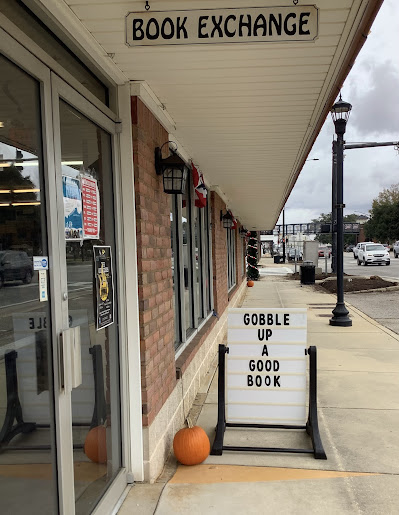
Sign outside the Foley Book Exchange.

The Foley Book Exchange

When my friends Leanna and Audrey had their quilt shop in L.A (lower Alabama)—Foley, Alabama to be exact—I had sales calls with them a couple of times a year. During one of my trips, I discovered the Foley Book Exchange. Since then, when I travel to the Alabama coast, I try to schedule a little bit of time, if at all possible, to peruse the vintage and out-of-print treasures on their shelves… or piled on the chair, or in the latest stacks of books on the floor that are awaiting the shelving process. If I limited time, I beeline to the Art/Hobby/Craft section (I know exactly where it’s located). Local (especially independent) book stores—like quilt shops—are on the top of my “Must-Visit” list when traveling!

Earlier this month, I was again in Foley, and stopped at the Book Exchange. Much to my surprise and delight, this classic title, by the revolutionary knitter extraordinaire, Elizabeth Zimmerman, called Knitting Without Tears, was there for the taking! Needless to say, Knitting Without Tears (along with a few other books) came home with me. 
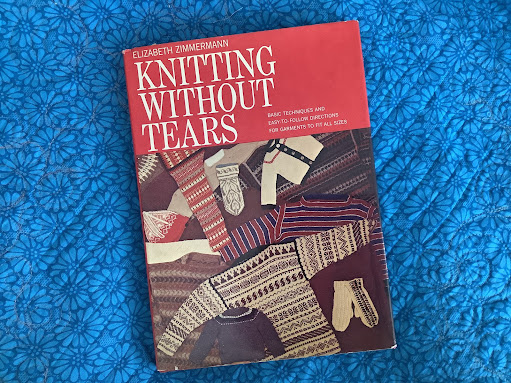
Knitting Without Tears, by Elizabeth Zimmerman.

This copy of Knitting Without Tears is a 1971 edition and in very good condition. The original price, as printed on the inside cover flap, was $7.95. Although the book didn’t have a colophon (being a typography aficionado, I looked), it was printed in the USA.
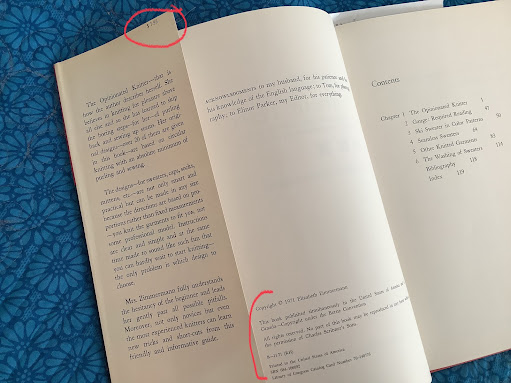
Knitting Without Tears, Copyright 1971, $7.95 original price.

I started reading my new acquisition—which is Elizabeth’s first book—last night. The text is conversational in nature, authoritative and heart-felt, and has plenty of good points and examples that back up what she is talking about. This hardbound edition has the wide outside page margins, a functional serif typeface, ample leading, uses true small caps, and is printed on a durable paper stock.

Heed these Recommendations from a Revered Expert

The first chapter (there is no Preface or Foreword in this book) is called “The Opinionated Knitter.” The heading pulls you right in and gives an idea of how the author feels about herself as a knitter and about the art and craft of knitting itself. I’d like to share a few of her recommendations that are relevant today as they were in the 1970s. Her words, though directed toward a knitter, can readily apply to a quilter as well. Here they are:

Where to buy—go to the independent specialty shops

“… start off by going to the best specialty yarn shop or good department store that you can find. It is not wise to shop around for cheap wool [her yarn fiber preference] unless you are very experienced, or are willing to risk spending hours of work on an object that will shrink, fade or run. A well-made sweater, knitted with good will and good wool, is beyond price; why try to save a dollar on the material?”

How much to buy—any extra is insurance or for future projects

“When wondering how much wool to buy, ask the saleslady. She knows by experience. If she doesn’t know and isn’t interested, go to another store.” “Consult the nice expert in the wool shop, and if she doesn’t suggest taking an extra skein as insurance against running short, take one anyway. …think of what a disaster it would be to run short, and to fail to match the dye lot. Anyway, extra skeins are always useful for socks, caps, mittens, color patterns, or stripes.” 

The corollary for quilters or sewers is to also buy a little extra. If it’s a fabric you love but don’t have a plan for it, the rule of thumb is "3 yards will be enough for borders" on a throw quilt or average size bed quilt. For garments, you may need to adjust the width of a hem, lengthen sleeves or pant legs. And, if you prewash (I always do this when sewing garments), you want to accommodate for any shrinkage.

Most fabric collections in the quilting market are “one and done.” So if you don’t get what you need for your project at the time of purchase, there is a good possibility the fabric will not be available after a few months… and a definite probability that your local quilt shop will not be able to purchase an additional bolt for you.
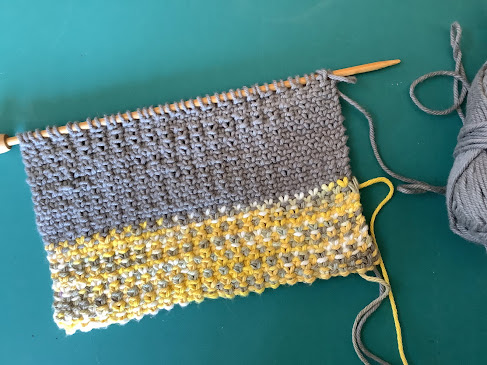
Hand knitting with leftover yarns.

Slow stitching maximizes your budget

Elizabeth says, “If you prefer to economize and love to knit, make your sweaters with very fine wool and many stitches.” “Fine knitting gives you many more hours of your favorite hobby before you have to sally forth and make another capital investment.”

For quilters and stitchers: it doesn’t take a lot of materials and you won’t break the bank to get hours of stitching pleasure from handwork or slow stitching. 
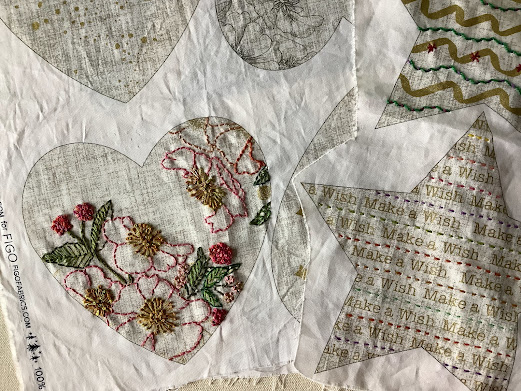
Hand embroidery on printed fabric panel.

Slow stitching “soothes the troubled spirit”

I’ll conclude with another quote from Elizabeth Zimmerman’s book: “… properly practiced, knitting soothes the troubled spirit, and it doesn’t hurt the untroubled spirit either.”

Enjoy slow stitching or a good book this Thanksgiving.


Sunday, October 15, 2023

Simple techniques yield big impact with texture and color

Don’t ya love projects that make a statement but are easy to make? These small projects use basic techniques, require minimal tools and supplies, and still make an impact because of their colors and textures.

Woven coaster and hand knit cotton dishcloths are easy projects.

Loopy Loom woven coasters

Tools and Materials: Loopy Loom, worn out socks, scissors, crochet hook

On occasion, I love to pull out my red Loopy Loom and weave a coaster or a pot holder from worn out or orphan socks. My metal Loopy Loom came with a long metal hook for weaving, but I use my fingers for the tabby (plain weave: over 1, under 1) weaving technique. Stripes and other patterns on socks add color and interest to the woven texture. 

Use the Zoom Loom and a pair of worn out socks.

I use a crochet hook to finish the looped edges after the weaving is complete. We use these small weavings for coasters (hot and cold beverages), hot pads/trivets, and pot holders. This is a wonderful re-purposing project and great way to upcycle unrepairable socks.

Hand knit dish cloths

Tools and Materials: cotton yarn (variegated, solid, or both), knitting needles, crochet hook, yarn needle for weaving in the yarn tails.

Hand knit cotton dishcloths.

Using a linen stitch pattern, the slip stitch knitting technique creates a firm fabric and an interesting texture on these hand knit dish cloths. With a variegated yarn, there is an additional lovely color interchange created by the slipped stitches from the row below. This is the perfect stash-buster yarn project! Use up those extra little balls of yarn for a fun and useful project. 

A crocheted edge in single crochet or a slip stitch unifies the piece and finishes the edges. A yarn needle is helpful to weave in the yarn tails. 

Hand embroidery on printed fabric

Tools and Materials: embroidery floss, embroidery needle, embroidery hoop (optional), scissors, a fabric print

Basic embroidery stitches: back stitch, stem stitch, French knots, pistil stitch (long French knot), running stitch, straight stitch, blanket stitch.

Hand embroidery on a printed fabric panel.

Using fabric prints and fabric panels is NOT cheating. Capitalize on and enhance the printed motifs on fabrics. 

This is a cotton fabric panel from an upcoming holiday collection from FIGO Fabrics. Using 2 or 3 strands of embroidery floss, I’m embroidering around motifs and on the outlines. Any basic embroidery stitches will create beautiful textures. An embroidery stitch dictionary also has loads of inspiration for experimenting with new stitches. 

Hand embroidery on a printed fabric panel.

Choose floss in holiday colors, neutrals, brights, or colors from nature. Embroidery floss is inexpensive and readily available in a multitude of glorious colors. Or experiment with other beautiful threads such as perle cotton (various weights), cotton sashiko thread, and novelty yarns and threads. Got a thread stash? This is the perfect small canvas to use savored lengths and leftovers from other projects.

Hand embroidery on printed fabric panel.

These embroidered pieces can be backed and stuffed with a polyfill. A ribbon or yarn loop can be added to create holiday ornaments or gift decorations. Or they can be displayed as home decor in a festive bowl or basket.

Make small projects with big impact and happy stitching!


Sunday, July 17, 2022

The Laced Back Stitch: an ideal stitch for lettering

I recently studied laced stitches in a workshop with Susan Brandeis: the laced running stitch, laced chain stitch, and (my new favorite hand embroidery stitch) the laced backstitch. 

Circle Sampler: laced running stitch circle surrounded with French knots.


Stitched Typography

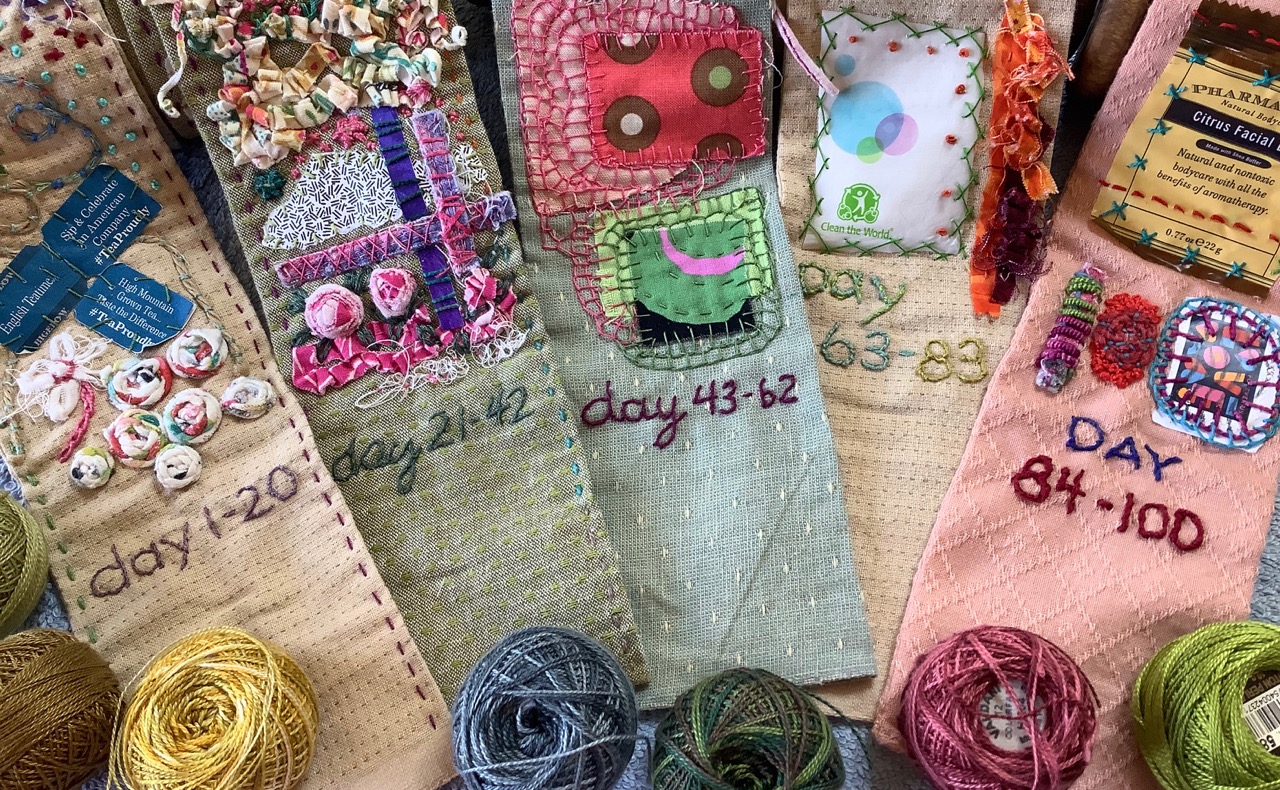
The laced back stitch came in very handy for documenting a day range on each of the stitched scrolls from my 100 Days of Slow Stitching with Found Objects project.

Documenting the day range on each scroll with the laced back stitch.

The letters and numbers were stitched on each scroll using the back stitch. Then, a second thread was woven or laced through those stitches. The laced thread lays on the surface of the work and is kept in place by the initial back stitches.  

My "stitched typography" was perfected by this lacing (weaving) technique. The photo below shows “before” and “after” lacing. See how the letters are smoother, more cohesive, and more readable? They are also slightly bolder because of the additional thread. The letters now appear more "finished."

Back stitch (top) and laced back stitch (below).

Even as an afterthought, if you decide you want a laced stitch, you can easily go back and do it on existing work.

Vintage Stitch Dictionaries

Two of my vintage stitch dictionaries provide variations on laced stitches. These stitches are also referred to as "threaded" stitches and "whipped" stitches. Whatever the terminology, they are fun and easy stitches to accomplish.

From Needlework Stitches by Barbara Snook.

From Handbook of Stitches by Grete Petersen and Elsie Svennås.


Laced stitch variations

The lacing technique has all kinds of exciting options! Experiment with lacing a contrasting color of thread, multiple threads, decorative yarns, silk ribbon, fabric slivers, weaving in different directions, or incorporate other embellishments.

A running stitch laced with a stand of sock yarn. 
The tension of the laced yarn varies to provide dimension and interest.

Try them all!


Sunday, May 29, 2022

100 Days of Slow Stitching with found objects—a recap

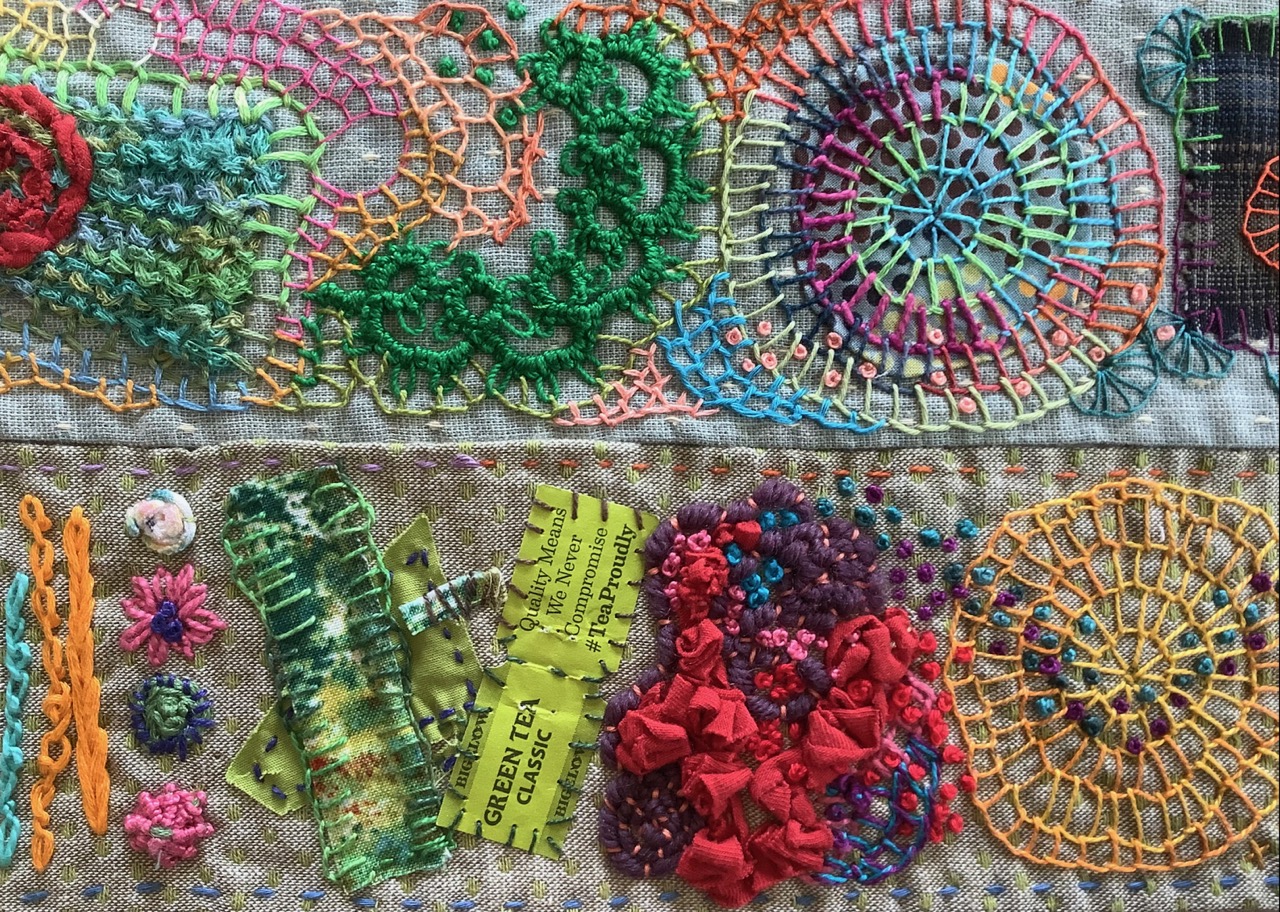
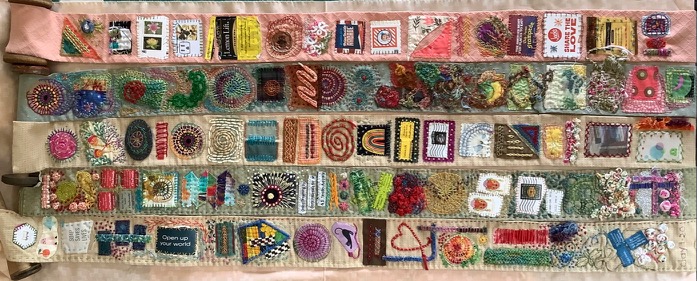
The 2022 100 Day Project came to an end on May 23. For my 100 Days of Slow Stitching: Stitched Scrolls with Found Objects and Fallen Pieces, I showed up every day and have 5 hand stitched journal scrolls that show the results of this daily practice. I love them!

The 100 Day Project 2022: Stitching Found Objects and Fallen Pieces.

100 days of Found Objects and Fallen Pieces

To get started, I gathered leftover bits (fallen pieces) from various past projects to fill two small baggies. By being observant and present during this daily exercise, I discovered a number of random, everyday items that are often taken for granted or discarded. This expanded my selection of "found objects." Both were incorporated these into my stitch journal scrolls. A few of them include...

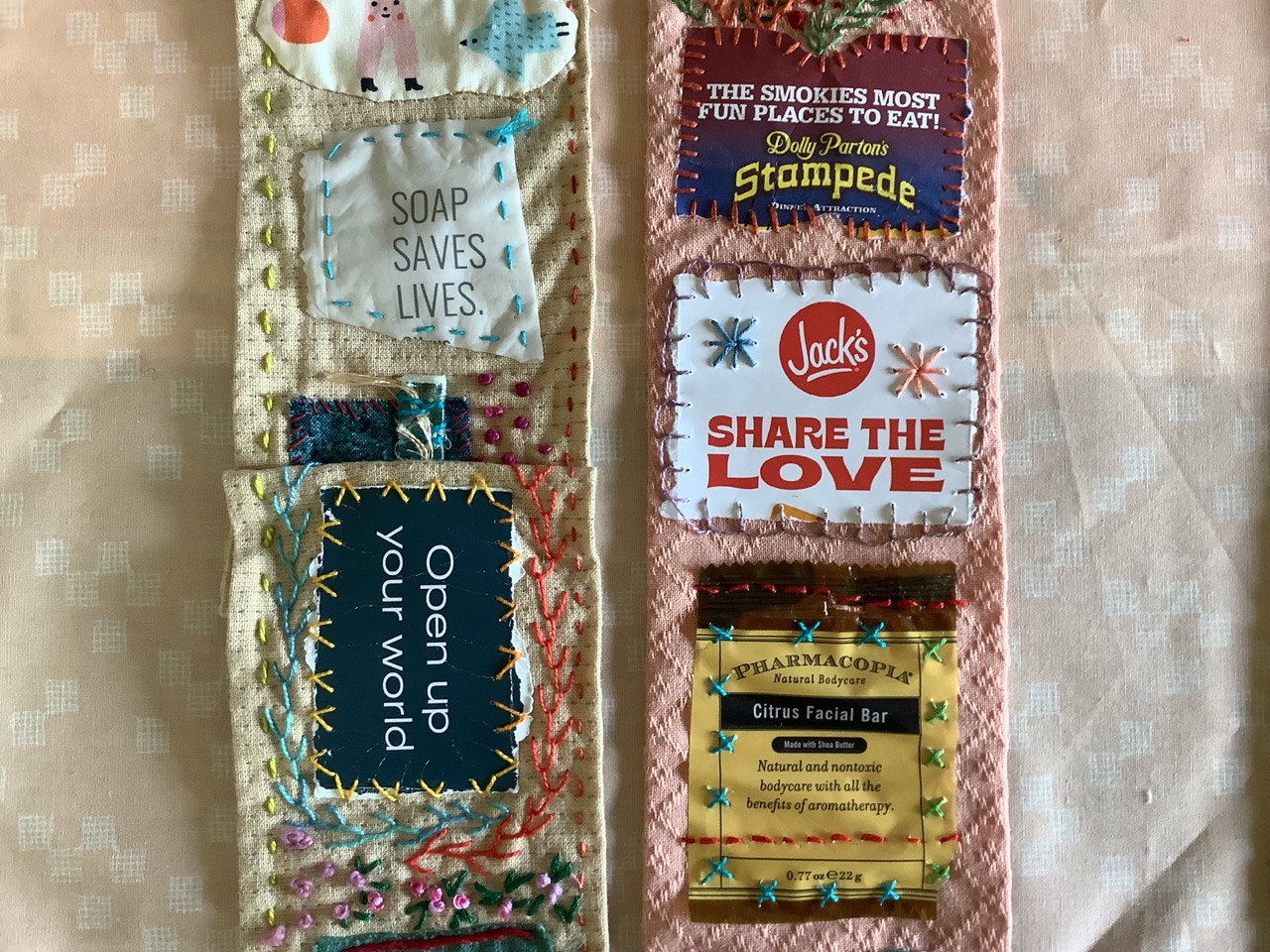
Hotel and travel paraphernalia: key card paper envelopes, soap wrappers, and food coupons. 

Hotel paraphernalia: paper key card envelopes and soap wrappers.

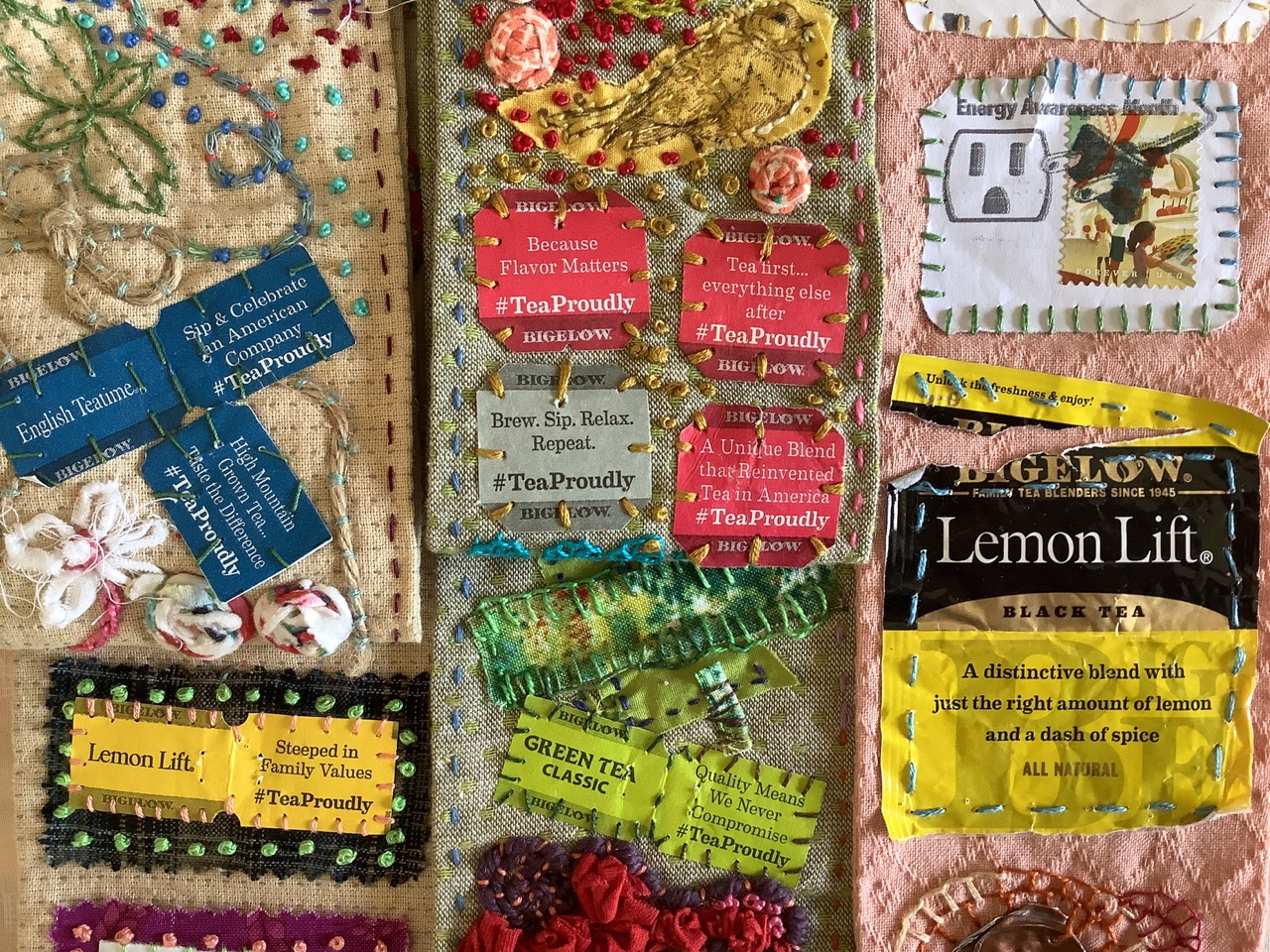
Tea bag tags and wrappers: have you ever taken time to read the tags on the end of tea bag strings?

Tea bag wrappers and tags on the end of the tea bag strings.

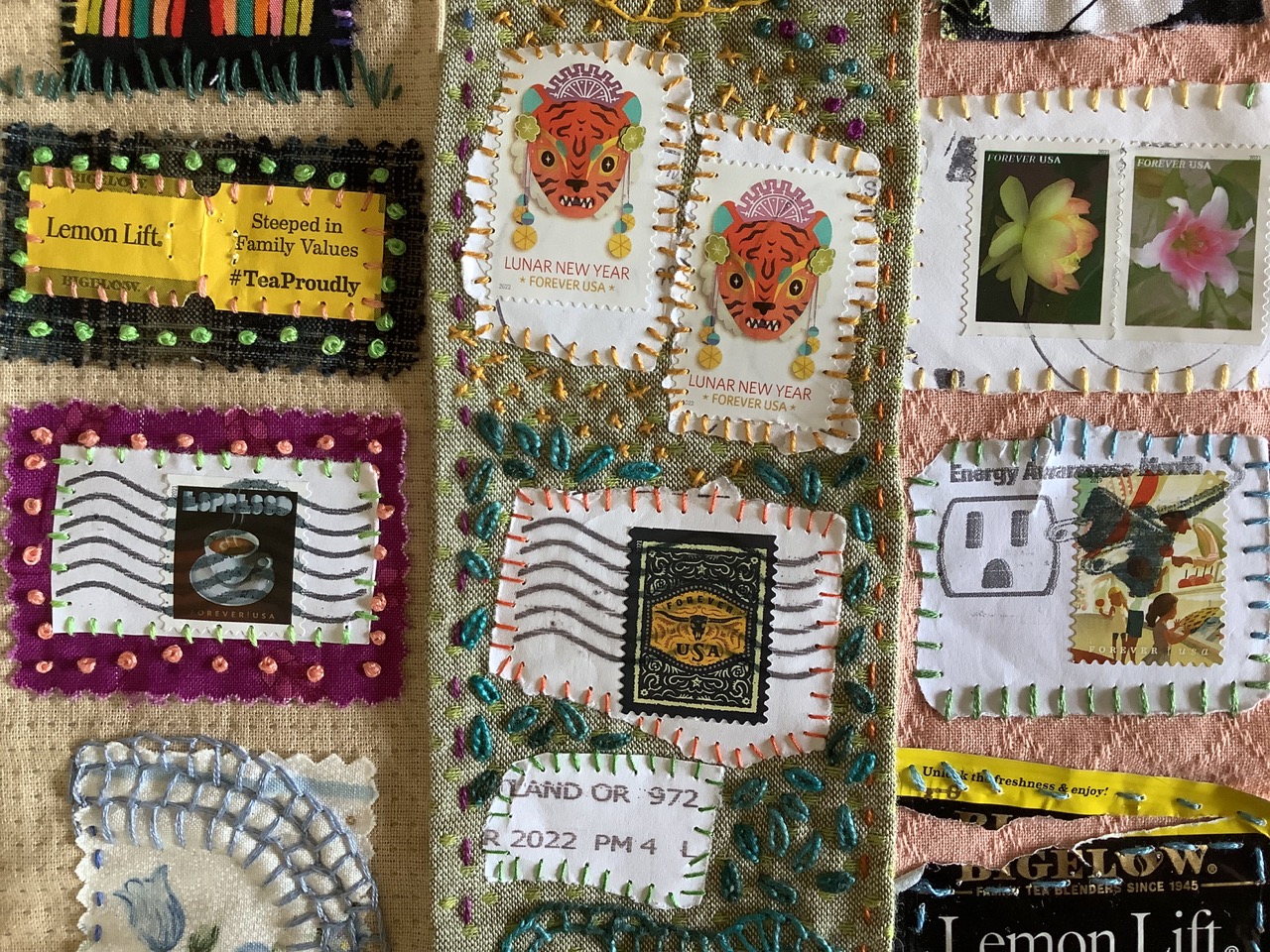
Postage stamps: there are colorful commemorative first class postage stamps and "themed" cancellation marks (like "Energy Awareness Month") adorning our mail pieces.

Commemorative postage stamps.

Colorful texture was created by couching down thrums and crumbs—yarn bits, handmade paper scraps, fabric trimmings, thread waste—to the fabric scrolls.

Thrums and crumbs create colorful texture.


New embroidery stitches and new favorites

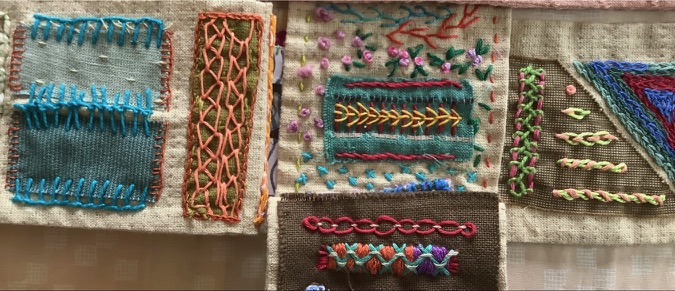
The more one practices, the better one gets. This is true for embroidery. And I found I grew fonder of some basic stitches by doing them more frequently, and with new color combinations, and different types and weights of thread. 

Couching: the laying of threads [or yarn or fabric slivers] on the surface of the fabric and securing them or anchoring them with small stitches of another thread.

Couching yarn, knit fabric slivers, quilt trimmings, etc. with various threads.

Blanket stitch: this stitch has so many variations and possibilities. It can be uniform in size and shape or very organic. I've used multiple thread colors and used it to appliqué and couch other fabrics and threads. My favorite motif is creating a mandala/circle by working from the center outwards.

The blanket stitch and its variations.

Three embroidery stitch books from the '60s and '70s were used as reference to learn new stitches. This 100 Day Slow Stitching Project was a good opportunity to try something new. 

A stitch sampler of new-to-me stitches.

Finding new materials for stitching

Fallen pieces included "fabric slivers" from the serger and trimmings from the rotary cutter. If you have a large eye needle, these slivers can be threaded through the needle and used to stitch—lazy daisy stitches, ruffles, spider web roses and other embroidery stitches.

Embroidering with knit and woven fabric slivers.

Incorporating other handwork techniques

It was fun to incorporate samples of other techniques into the stitch journal: hand weaving, quilted scraps, knitting swatches, and tatting samples.

Incorporating weaving, knitting, tatting and quilted samples.

Five stitched scrolls: front and back

Here are my 5 stitched scrolls end to end.

Five stitched scrolls from The 100 Day Project 2022.

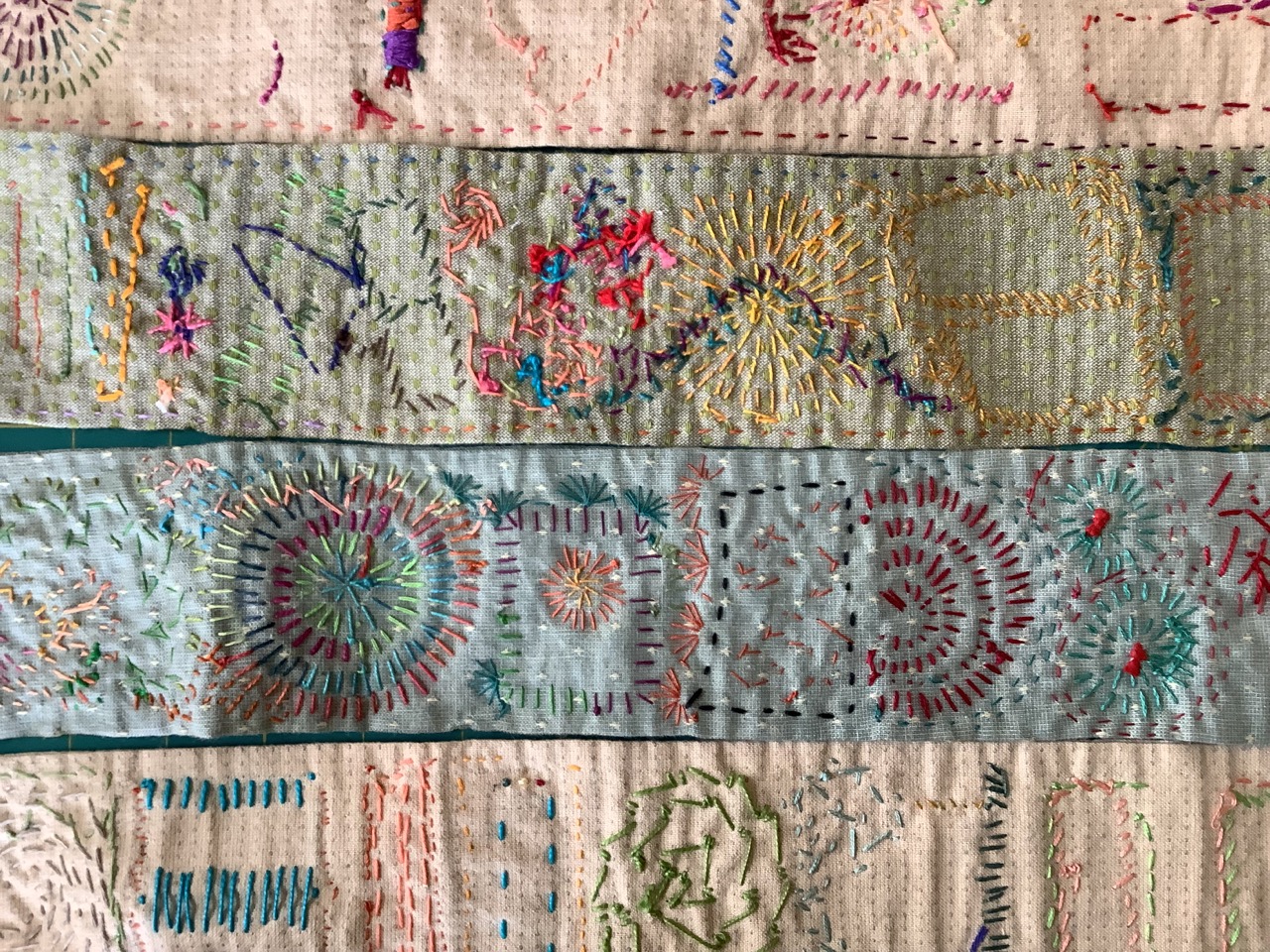
And no embroidery project would not be complete without showing the back. 

Backs of the stitched scrolls.

Take time to notice the small things that are often overlooked.


Related Posts Plugin for WordPress, Blogger...