Showing posts with label textile collage. Show all posts

Monday, July 3, 2023

Discoveries while doing 100 Days of Textile Collages

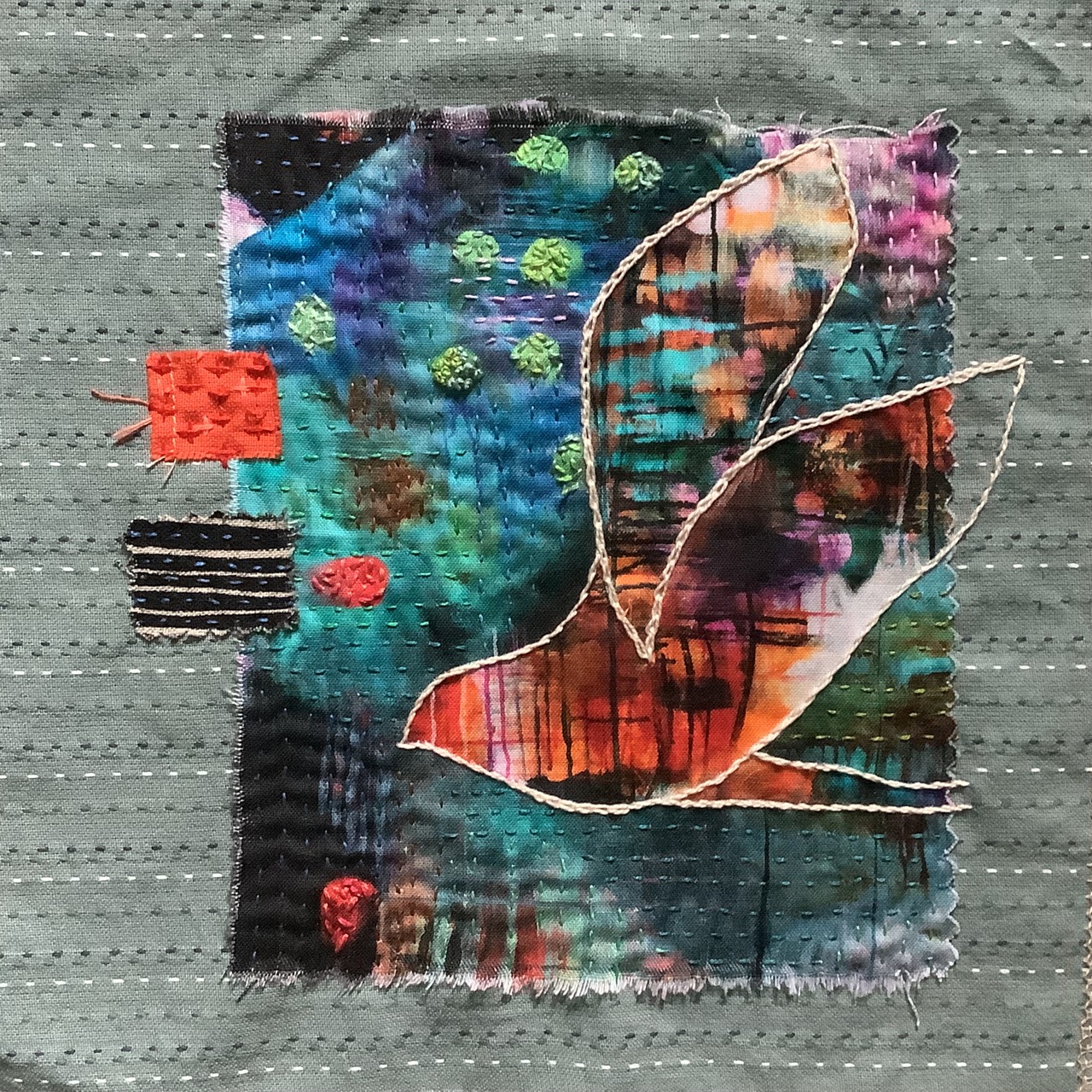
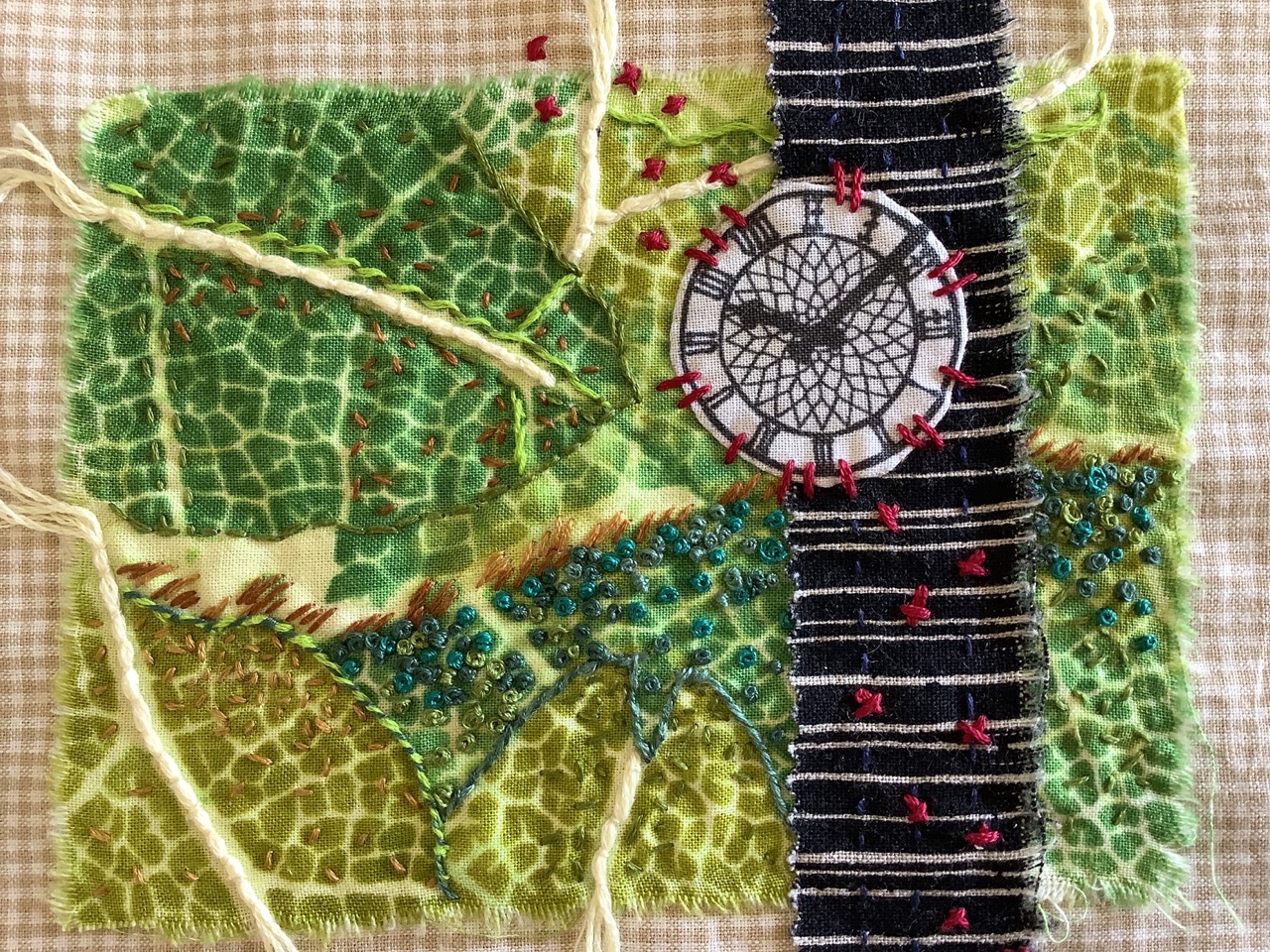
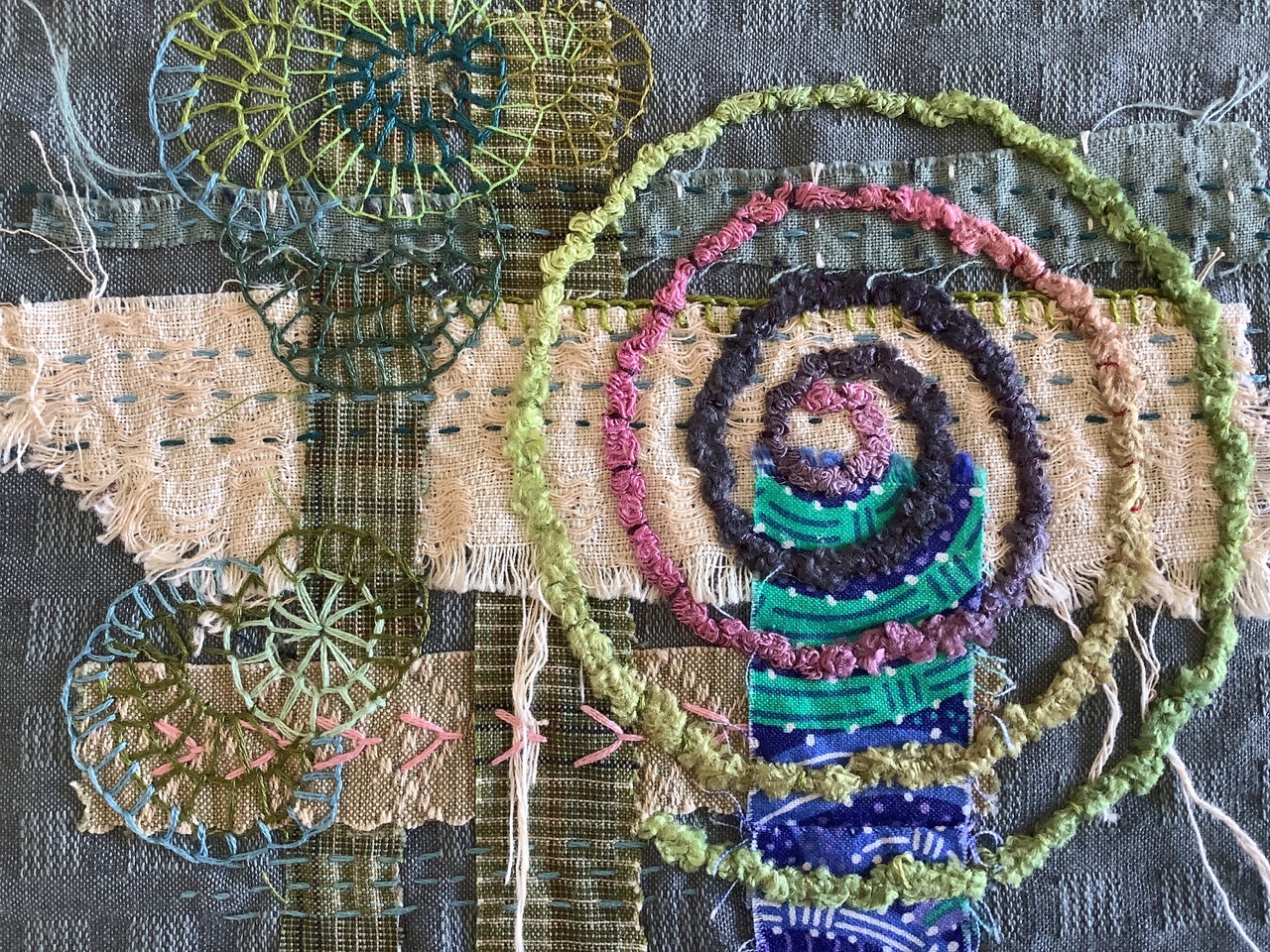
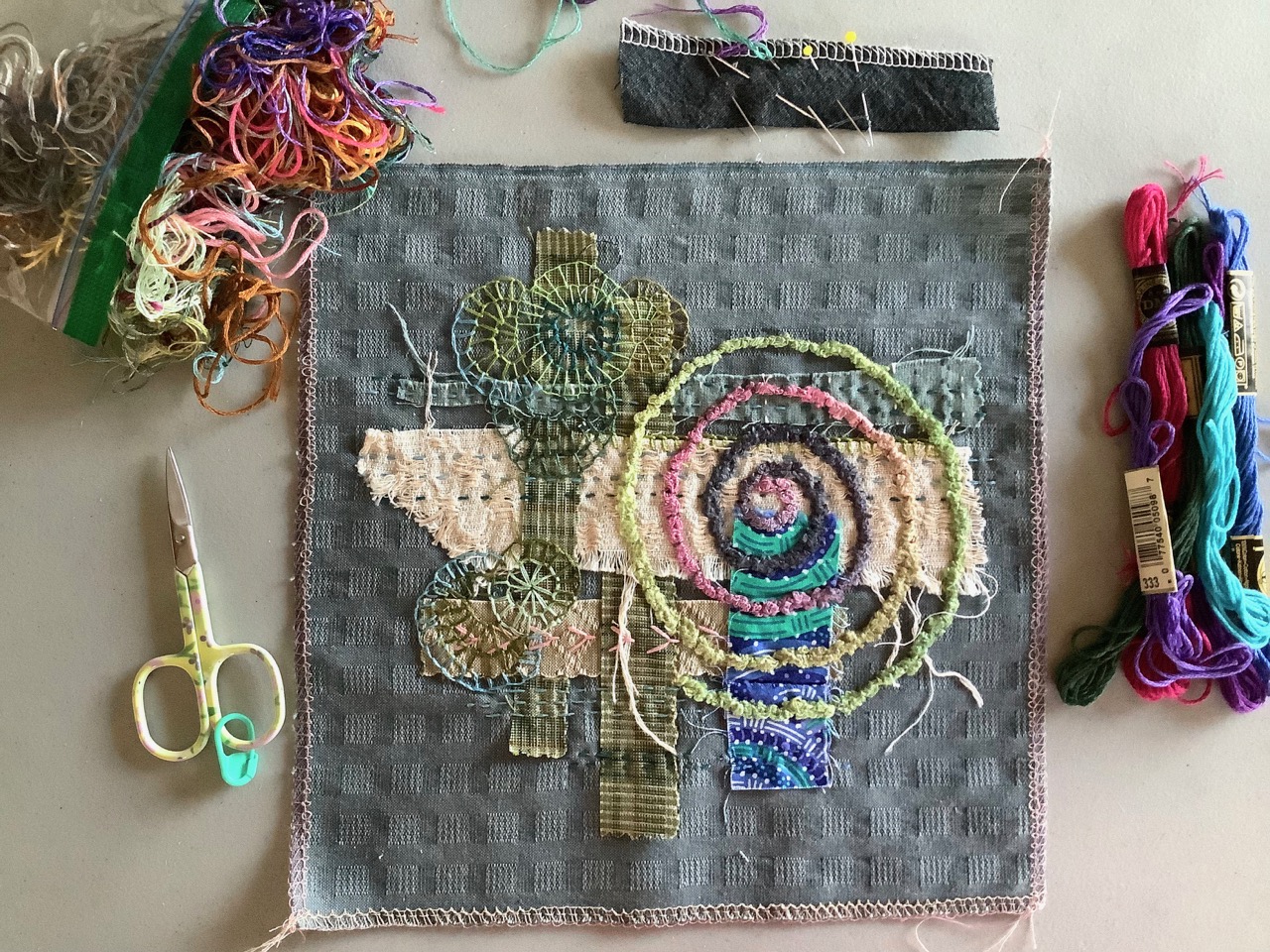
I wrapped up my 100 Days of Fabric and Stitch Collage project at the end of May. I have 18 stitched compositions that eventually will be made into a textile book... that's the plan, anyway.

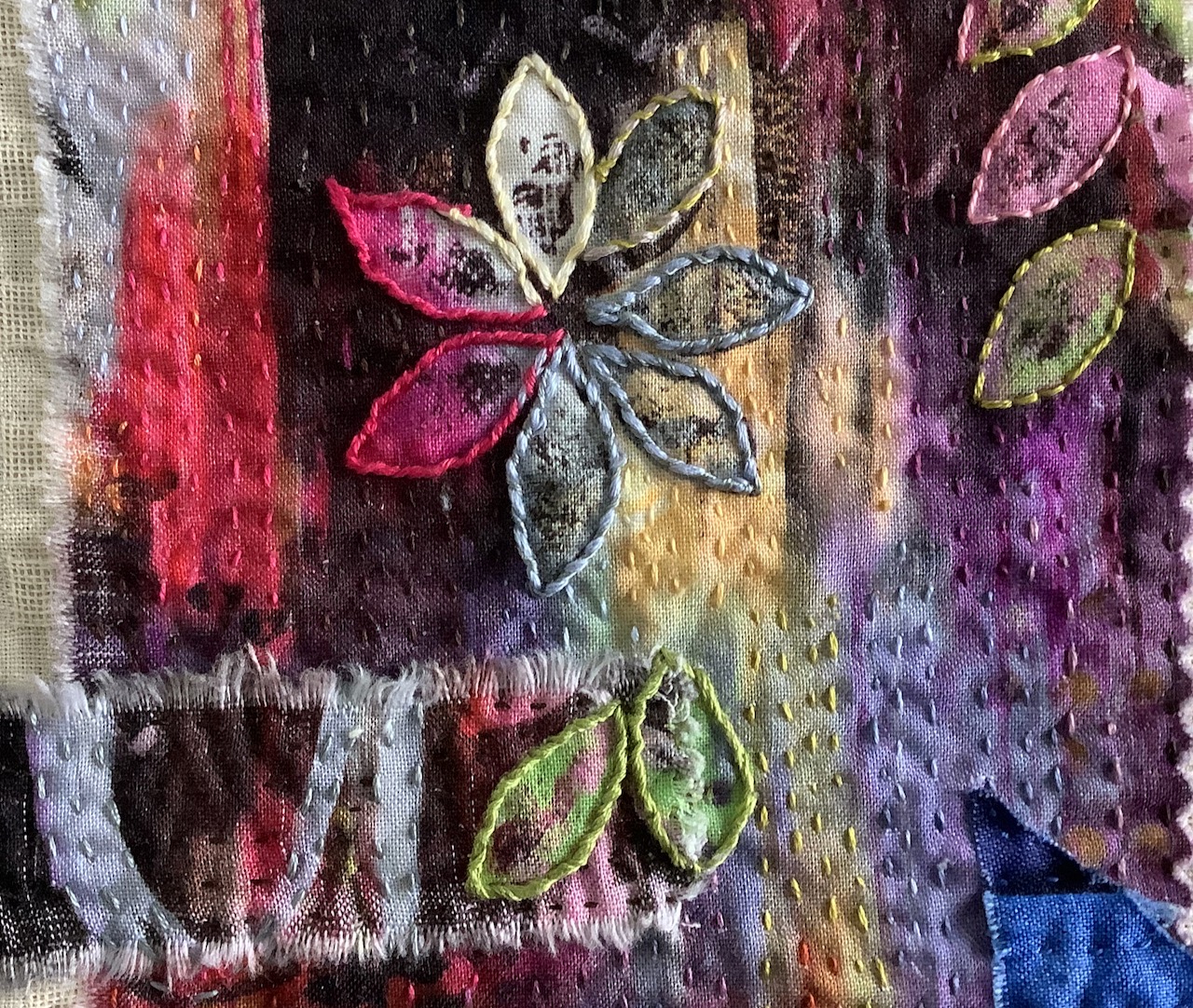
Detail of stitching on fabric collaged composition.


Discoveries

2023 is my third year doing The 100 Day Project. I always learn something from the process or at the very least, I get more proficient with some skill or technique that in which I'm interested. Here are my discoveries from this year's 100 Days of Fabric and Stitch Collage.

  • A composition takes as long as it needs to take. At the beginning of the project, I planned on spending [exactly] 5 days on each composition. 20 fabric squares x 5 days each = 100 days. I learned that some compositions come together in a flash, but others need more time to develop and refine. I quickly learned this by Day 12.
  • Yarn, string, thrums and knitted swatches add dimension. When I dove into a basket of old knitted swatches and a jar of yarn thrums, my compositions become more dimensional. This was fun! Clipped yarn tails, knitted gauge swatches, frogged swatches, dyed cotton string from a shibori project, tatted motifs with mistakes, and other leftover yarns and other odd bits brought dimension and variety—and a lot more interest—to the collages.
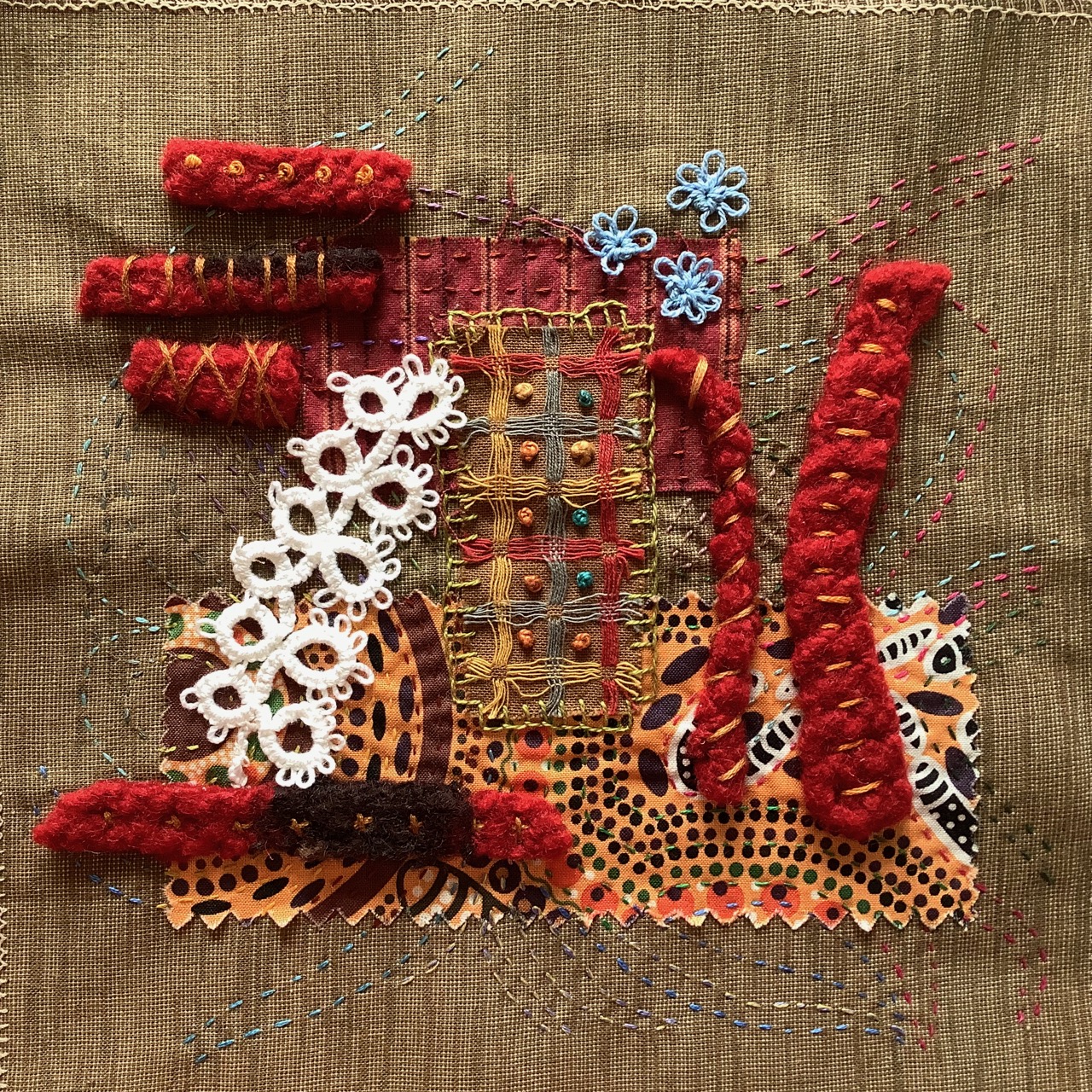
Tatting, felted wool, yarn-dyed wovens and printed cottons.

Unraveled knitting and novelty yarns couched over fabric scraps.
  • 1 - 6 strands of embroidery floss—all good choices. The weight of a stitched line can be varied by using 1, 2, 3, 4 and 6 stands of embroidery floss. I used all of these on various compositions throughout the project. 
Running stitches with 1 or 2 strands of embroidery floss.
Couched floss around flower petals and leaf shapes.
  • A diversity of fabrics. Hand stitching with the yarn-dyed fabrics [from Diamond Textiles] was such a dream! All the background fabrics for my collage compositions were from Diamond Textiles. Various fabrics were used for the collages—yarn-dyed wovens, quilting cottons, batiks, a cotton knit scrap, and a printed linen. The linen was difficult to needle, which was surprising to me.
Yarn-dyed wovens, batiks, printed cotton fabric.
Running stitches, couching, satin stitch, French knots, blanket stitch.

Combining yarn-dyed wovens, quilting cottons and a cotton knit (center).
  • Couching. I really enjoyed the couching stitch. Couching yarn, string, tatted bits... I am enamoured with this stitch!
Couched yarns with French knots.

Dyed cotton string couched over blanket stitch rounds.
  • Stitches are not permanent! Stitching is not like mark-making with ink or paint (thank goodness). There were a number of times that I took out stitches—either the stitch was not appropriate (couching was better than a back stitch), the thread color was not the best choice, the stitch was poorly formed, etc. You don't have to go with the first decision. Over the 100 days, I became less and less hesitant about taking out stitches if I wasn't satisfied. Re-do it if you don't like it!

Embracing the imperfection of frayed edges

Since the collage fabrics were all scraps and fabric swatches, the edges were left frayed or pinked. I liked the organic quality of the frayed edges as well as the texture they provided. It also allowed the process to be spontaneous and relaxing... the wabi-sabi aesthetic.

Frayed and pinked edges of a discontinued fabric sample.

Running stitches with cotton sashiko thread. Couched yarn thrums.
Yarn-dyed wovens and printed cotton scraps.


Documentation

Documentation and progress posts from this year's 100 Day Project can be found here:

Prepping fabrics for textile collages

Stitches used on my collage compositions: blanket stitch, running stitch, couching, French knots, lazy daisy, back stitch, satin stitch, chain stitch (and maybe one or two others).

Daily photos of 100 Days of Fabric and Stitch Collage are posted on my Instagram feed at @veronica.fiberantics and #100daysoffabricandstitchcollage.  

The backs of these pieces are interesting, too.

Back of composition with couched yarns.


Wednesday, April 12, 2023

Six days of stitching the Secret Trellis Garden

Working in the garden is often challenging, but it's also rewarding when you see the fruits of your labor. This composition, called the Secret Trellis Garden, is one from my 100 Days of Textile Collage project. This garden grew over the course of 6 days.

The Secret Trellis Garden
from 100 Days of Textile Collage project 2023.

Days 1 - 6

The beginning of this collage truly started with fabric leftovers—scraps from fussy cutting hexagon shapes for English paper piecing (EPP). You can see where the hexagons have been cut out. The background is also pieced from cut-offs from previous projects.

Secret Trellis Garden Day 1: running stitches in a zigzag pattern.

Following the design on the print, the scraps were appliquéd to the base in a zigzag (or "trellis") pattern. Unknown to me, the seeds for this stitched garden had been planted from the inception—with the trellis. 

Secret Trellis Garden Day 2: outlining the circle motifs.

The trellis was build (stitched) over the first two days. By Day 3, I needed to figure out how to bridge the two appliqué pieces to make the piece more unified. See that odd-shaped dark background showing through between the two appliqué pieces? That was the problem.

I incorporated yarn thrums in a previous composition and felt it was successful. So, auditioning thrums and other ideas was needed to bring cohesiveness to this one. 

Auditioning placement for yarn thrums.

The addition of another lighter fabric solved the problem. 

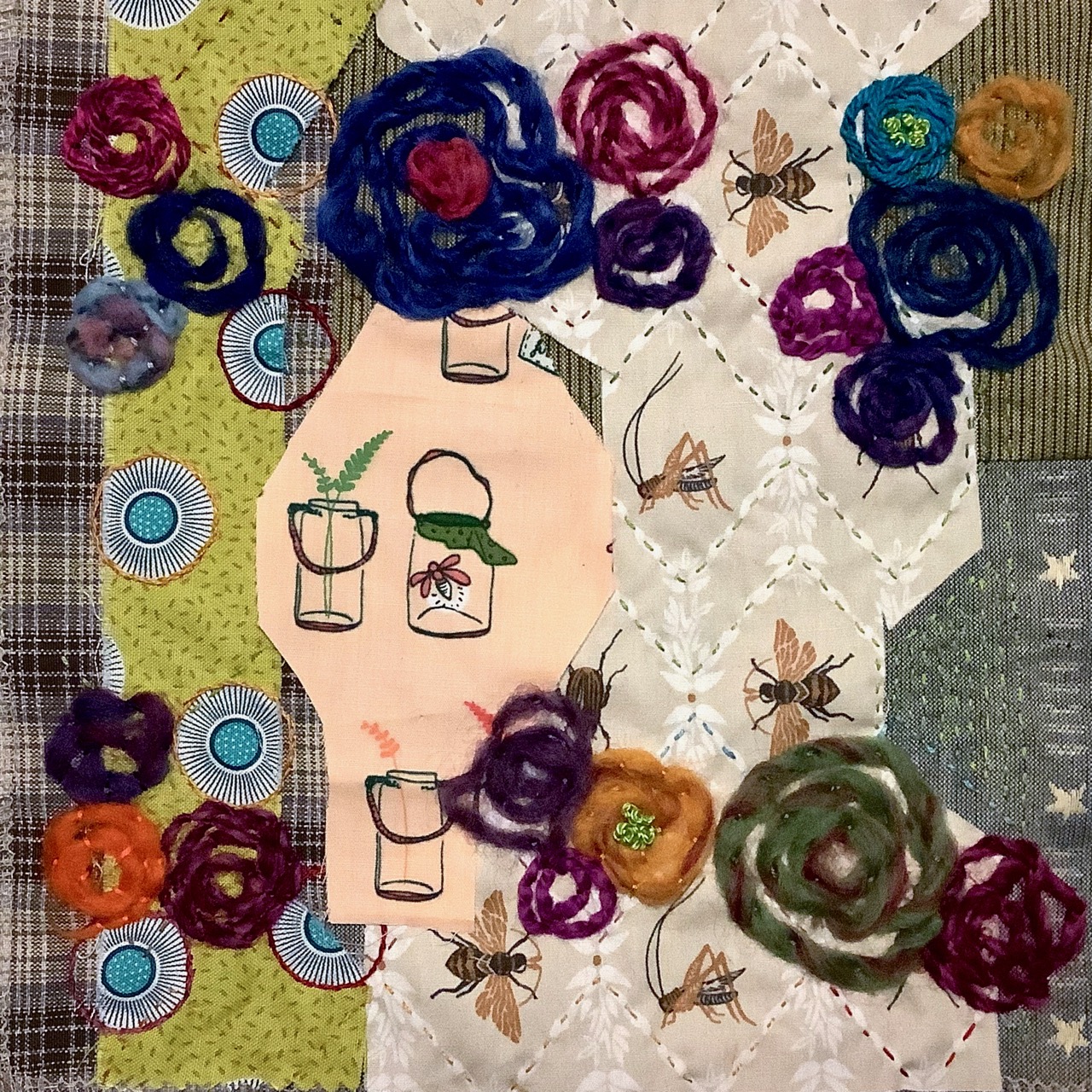
With the addition of a third fabric, the prints started to tell a story. The bees, grasshoppers, circles (flowers), the mason jars... all began to converse in this textile garden.

With another piece of fabric added, the lighter value made the composition mor unified.

The next obvious step was to turn the composition 180 degrees so the grasshoppers were right-side-up.

Secret Trellis Garden Day 3: rotating the work 180 degrees.

With the garden theme secured, it was time to add blooms and greenery. The yarn thrum spirals transformed themselves into flower blooms. French knots formed the flower centers. The beetles (the "crunchy" bugs) disappeared beneath flower petals where they belong.

Couching the yarn thrum flowers (in progress).

On Day 4, the garden took shape.

Secret Trellis Garden Day 4: yarn thrum blooms and stitched leaves and vines.

Day 5 focused on details: more French knots in the flower centers and the circle motifs; fireflies stitched in a doubled fly stitch; stem stitch outlines on the glass jars; stitched leaves with fly stitches supported the flowers.

Secret Trellis Garden Day 5: stitched flower centers, vines, leaves and fireflies were added.

On Day 6 the final touches included additional leaves and greenery, background kantha stitching, feather stitches at the bottom to ground the vines.

Secret Trellis Garden Day 6: the final composition.

In an outdoor garden, the work can been realized in the outcome. With a stitched garden, the work can be seen by looking at the back!

Secret Trellis Garden (back view).

The halfway point of the 100 Day Project

Today is Day 50 of the 100 Day Project 2023. The Secret Trellis Garden is my 8th textile collage composition.

Sunday, March 26, 2023

Day 33 of The 100 Day Project

 Time flies with The 100 Day Project. It's already a third of the way to the 100th day.

Textile Collage #1, The 100 Day Project 2023.

Project 1: 100 Days of Textile Collage and Stitch

I've just about finished six pages of textile collages for a stitch book. So, I'm averaging about 5 days for each page. With each composition, the basic stitches at the commencement give way to more complexity and depth in a collage as each day passes.

First day (left) and Fifth day (right) of a textile and stitch collage.

Depending on the time available each day (or how tired I am after work), a few or several stitches are added to a composition. As one would expect, I tend to make more progress on weekends.

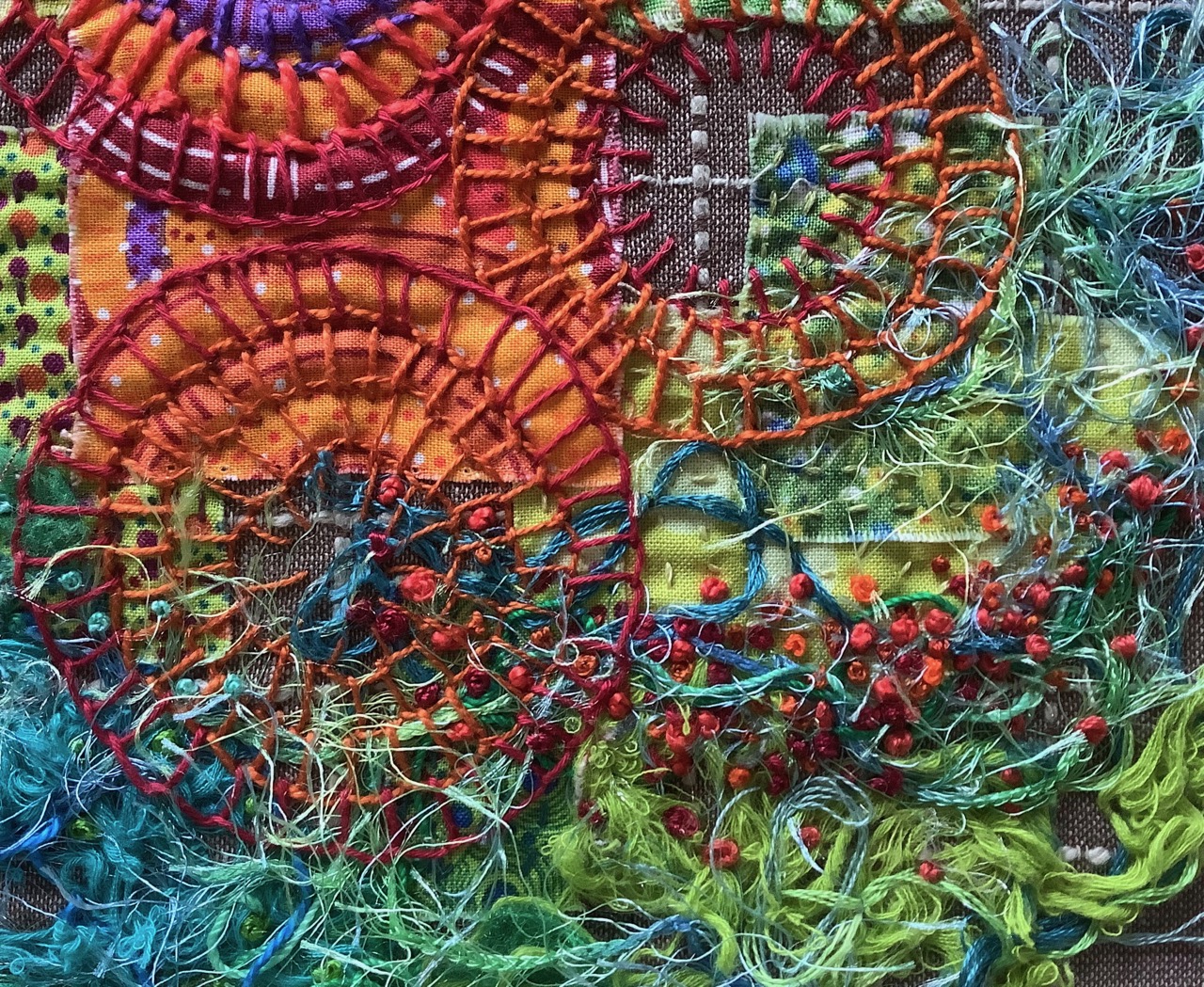
These are close-up photos of the collages so far.

Textile Collage #2, The 100 Day Project 2023.

Textile Collage #3, The 100 Day Project 2023.

The collages definitely got more dimensional after pulling and using bits from old knitting swatches and novelty yarn leftovers.

Textile Collage #4, The 100 Day Project 2023.

Textile Collage #5, The 100 Day Project 2023.

Textile Collage #6, The 100 Day Project 2023.

Project 2: 100 Days of Hand Lettering

My second project is 100 Days of Hand Lettering. I'm working through the exercises in "Love your [imperfect] Letters" with Willa Wanders.

Sometimes pages are filled with drills of strokes, letters, or alphabets. Finding pangrams made practicing more interesting.

Practicing hand lettering using pangrams.

Then I started lettering excerpts from travel brochures and magazines. Quotes and phrases give the lettering more meaning. 

Phrases from a Threads magazine article.

This exercise explores "faux calligraphy" by adding extra weight to the down strokes of a letter.

Hand lettering practice.

On occasion, I'll hand letter a quote in my new Junk Journal.

Hand lettering in my Junk Journal.

The hand lettering workshop has been very thorough and insightful. We've covered roman letterforms, creating a signature alphabet, serifs, faux calligraphy, script lettering and other lettering concepts.

I am enjoying both of my 100 Days Projects for 2023. The 100 Day Project is a good motivator to learn something new through a daily practice. 

This quote that sums it up.

Motivation gets you started...
Habit keeps you going.


Sunday, March 5, 2023

Day 12 of the 100 Day Project: Textile Collage

For those participating in The 100 Day Project, we're 12 days into it. I'm doing two Projects: 100 Days of Textile Collage and 100 Days of Hand Lettering. 

Second page composition. 100 Days of Textile Collage, 2023.

100 Days of Textile Collage project parameters

My 2023 plan for The 100 Days Project: Textile Collages is to 

  • use fabric scraps and various threads to create small textile collages. 
  • I prepared 20 fabric squares, 9" x 9" each, from yarn-dyed cotton quilting fabrics [by Diamond Textiles]. 
  • Each composition will be worked for 5 days, adding layers, details and stitch. 
  • The small collages will ultimately be made into a textile book/journal using a slot and tab bookbinding technique.

Modifying the process

I've completed two pages of stitched textile collages and am working on the third. After the first collage declared its completion after Day 4, I abandoned the 5-day time allotment. 

Lesson learned: Making art takes as long as it takes. 

If a textile collage is finished in 4 days... or 3 days... or in a day... I move on to the next. If I must cut more fabric squares, I can do that.

Textile collage, Days 1 - 4. 100 Days of Textile Collage, 2023.

The materials needed for this 100 Day Project are minimal and portable. I like this.

Textile collage tools and materials.

Last year's stitching project was a self-contained daily exercise. Working on a composition over several days allows for more detail, more thinking, and more time for the fine tuning and details, if needed.

Intuitive stitching

This is the third collage, currently in progress. Sometimes the fabric inspires the stitching. Sometimes the stitching defines a design or shape.

Using paper templates to define contours with stitches.

No predetermined plan. Just intuitive stitching. 

Sunday, February 19, 2023

Prepping for The 100 Day Project 2023

The 100 Day Project kicks off this week—February 22, 2023. I'm prepping supplies for my third year participating in this free global art project.

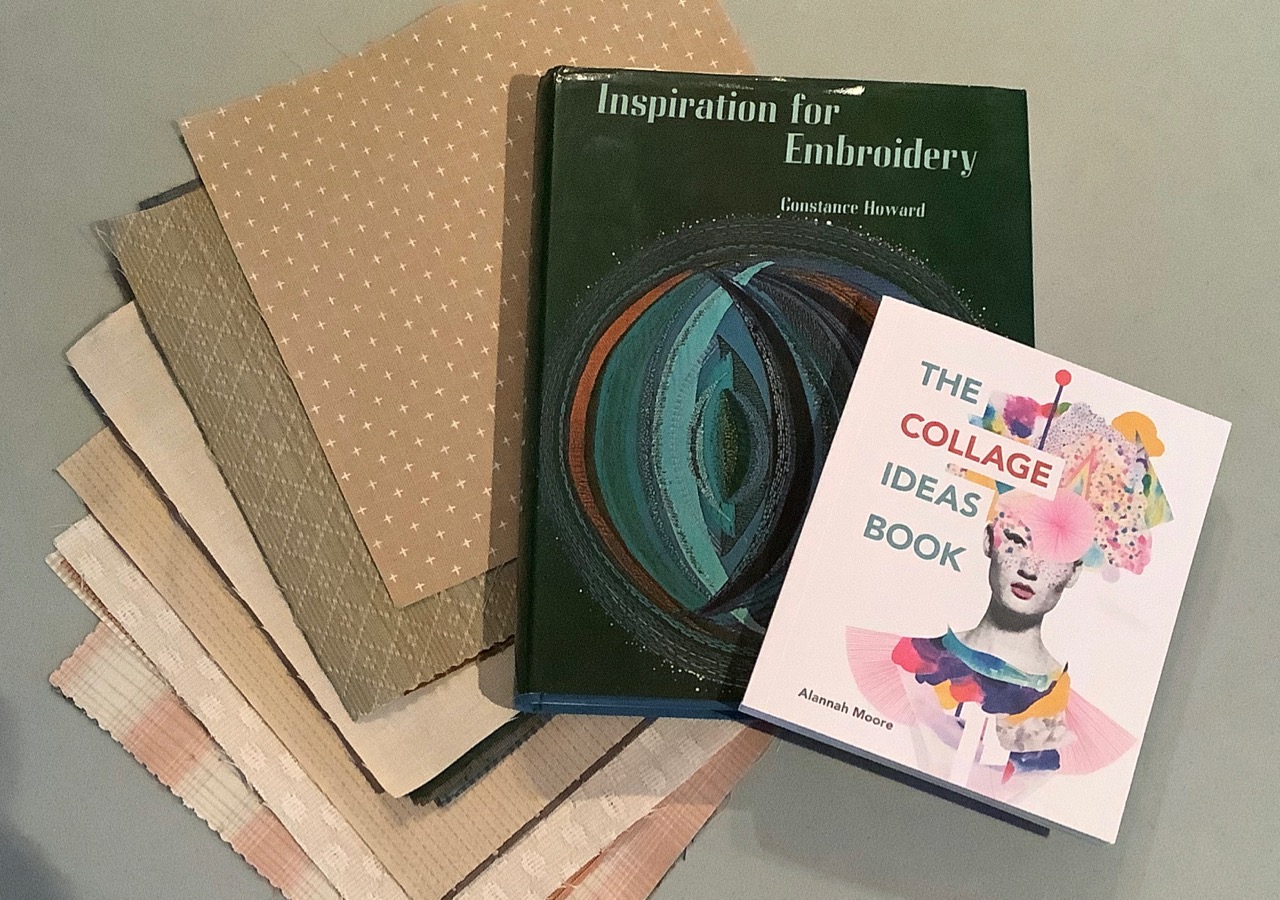
Base fabrics for 100 Days of Textile Collage and Stitch and two reference books.

For the past two years, I did two 100 Day Projects each year. This year, again, I'm planning and prepping for two different 100 Day Projects: 

  • one involving fabric, threads and stitch,
  • the other is going to be hand lettering.

100 Days of Textile Collage and Stitch

For the textile project, the plan is to create textile and stitch collages on fabric "pages" that will ultimately be assembled into a fabric stitch book/journal. The journal will be assembled using the "slot and tab" bookbinding method. This allows me to stitch individual pages without having to worry about page spreads or page order. 

Auditioning fabrics for the stitch collage journal.

I've pulled and cut different yarn-dyed fabrics [from Diamond Textiles] into 9" squares (with allowances for squaring up after stitching and seams). I envision the finished page size to be approximately 8" square. Now that backgrounds are cut, I want to serge the edges to prevent raveling during the process.

Trimming yarn-dyed fabrics for fabric collages and journal pages.

Threads, fabric scraps, and various stitch collage fodder will be gathered and packed into small baggies and zippered pouches along with tools such as needles, pins, scissors and perhaps an embroidery hoop.

My two reference books for ideas and inspiration are: 

  • Inspiration for Embroidery by Constance Howard, 1967 (and the pages have that lovely nostalgic scent of an old book), and
  • The Collage Ideas Book by Alannah Moore, 2018

I'm amused that these references were written over 50 years apart and I'll be using them in a 2023 project. 


100 Days of Hand Lettering

This past Christmas, I received a cool calligraphy set of nibs and inks. As with any hand skill, in order to get comfortable and proficient, it requires practice. The 100 Day Project is the perfect platform and motivation for doing this! I also enrolled in an online hand lettering class for art journaling—"Love your [imperfect] Letters" with Willa Wanders—and I'll be using it as a guide through the 100 days of practice.

Calligraphy set and tablet for 100 Days of Hand Lettering practice.

What do you get out of The 100 Day Project?

I'm Doing The 100 Project
Here is a video documentary from the Marquette Arts and Culture Center that hosted a community 100 Day Project and an exhibit of the body of work created by participants. Several of the participants talk about their project and what they discovered from the process. Have a listen...

Then find a simple idea,
make a promise to yourself,
show up every day,
and trust the process. 


Related Posts Plugin for WordPress, Blogger...